How to Stay Relevant as a Full Stack Developer in 2026
The old paradigm of hooking a frontend framework up to a basic CRUD API is no longer enough to land premium roles. With AI agents auto-generating boilerplate code in seconds, staying relevant demands a shift from writing raw syntax to engineering system architectures. Discover the core tools, databases, and AI-native architectures required to remain indispensable in 2026.
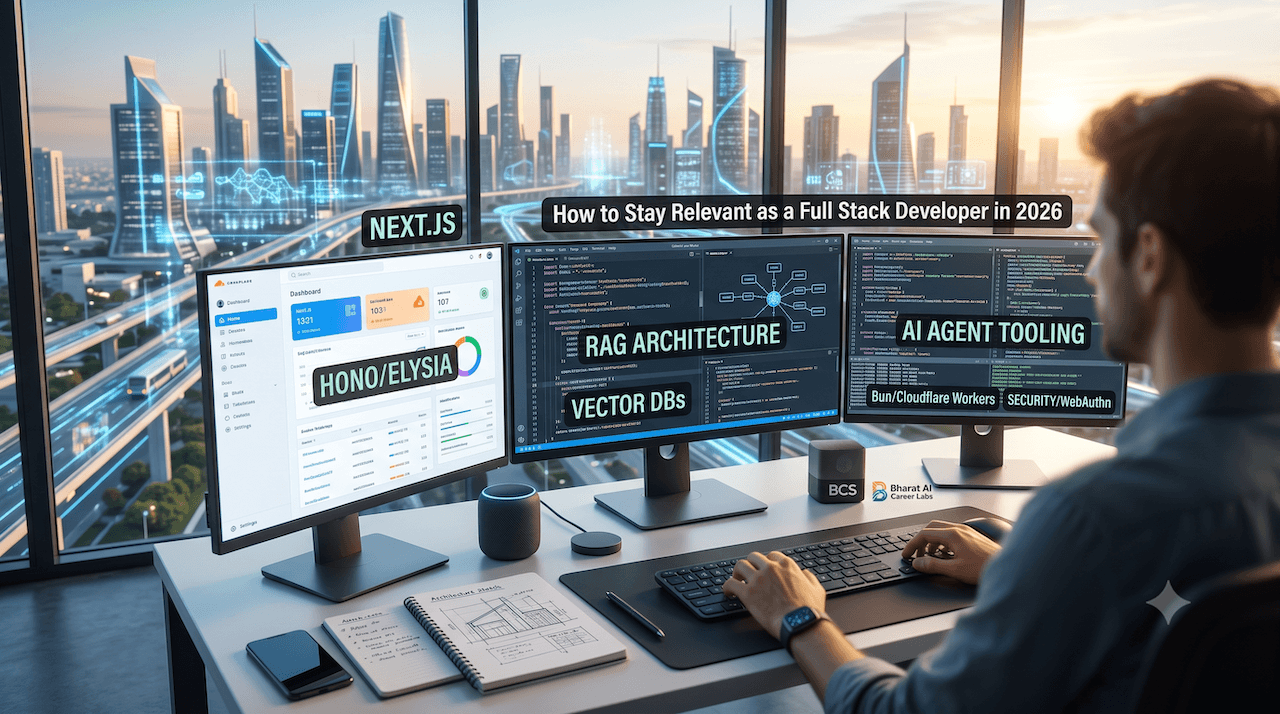
The tech landscape of 2026 has officially drawn a clear line in the sand. The old paradigm of a full stack engineer—someone who simply hooks a React frontend up to a Node.js API and calls a database query—is no longer enough to secure premium roles. With AI agents auto-generating boilerplate code in seconds, staying relevant demands an evolution. To remain highly sought after, full stack developers must transition from simple implementation engineers into architectural orchestrators.
If you want to command premium software engineering positions, you must understand exactly how the expectations of technical organizations have changed. At Bharat AI Career Labs, we continuously track the architectural pivots happening globally. This comprehensive guide outlines the critical strategies, architectures, and engineering domains you must master to remain indispensable in 2026.
1. Shift from Code Generation to Architectural Orchestration
In 2026, writing the syntax for a REST endpoint or a standard form validation component takes seconds using contextual AI tools. Your value is no longer measured by the volume of raw text files you produce each day. Instead, it is measured by system design, domain modeling, and how effectively you assemble complex distributed applications.
Focusing heavily on manual syntax writing, standard CRUD app construction, and debugging standard runtime syntax errors.
Focusing on prompt optimization, code review of AI generated components, complex system integration, and data lifecycle management.
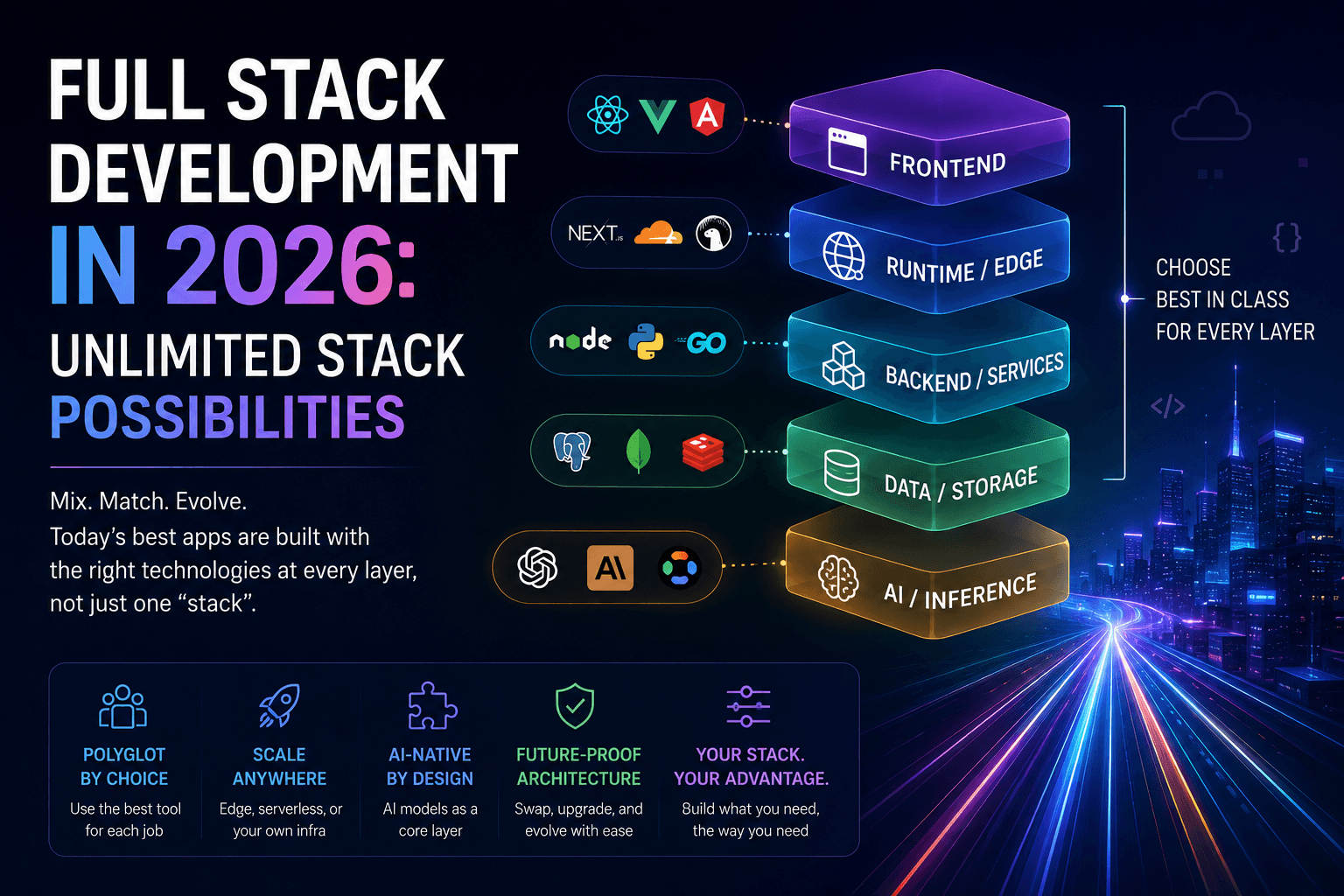
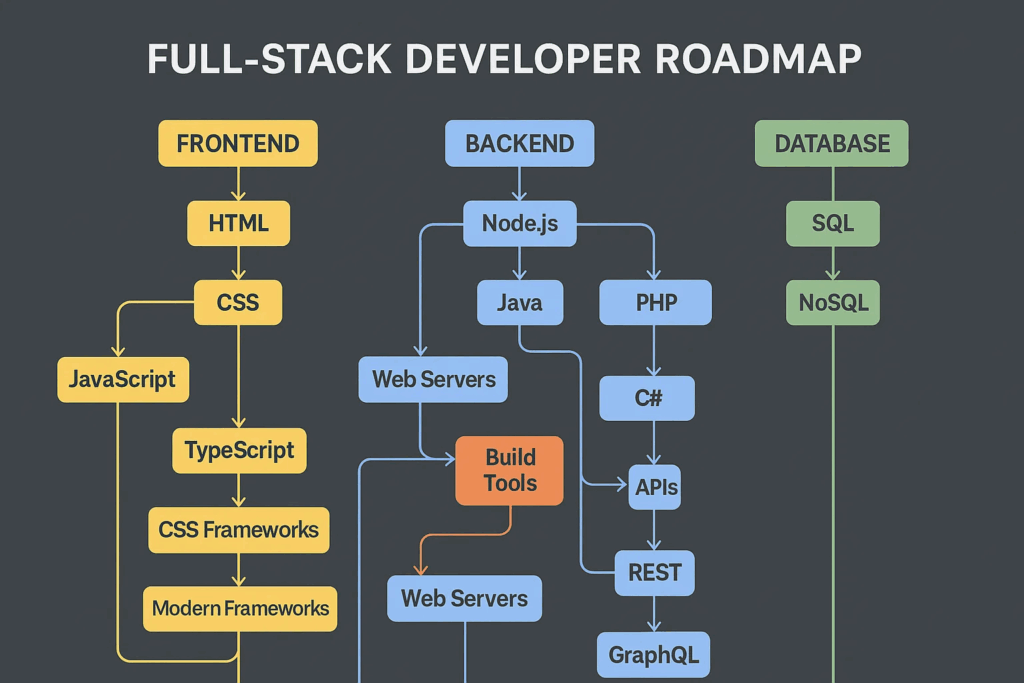
To build a resilient stack today, engineering pipelines require strong foundations in multiple domains. Understanding where the technology sits structurally helps engineers map out their learning paths effectively.
Senior Engineer Insight: "AI can write the function perfectly, but it doesn't understand your specific business constraints, data privacy laws, or latency limits. The human engineer is the ultimate validation layer."
2. Master AI Native Application Architecture
Full stack engineers are now regularly tasked with integrating Large Language Models (LLMs) directly into application flows. This means you need a deep, working knowledge of how to bridge software infrastructure with machine learning model outputs.
Retrieval-Augmented Generation (RAG) & Vector Databases
Passing raw textual data directly to an LLM context is cost-prohibitive and structurally limited. Engineers must know how to split internal application data into mathematical vectors and store them in vector engines like pgvector, Pinecone, or Milvus.
AI Agent Tooling (Function Calling)
Modern applications don't just ask AI questions; they allow AI agents to execute actions safely. You must know how to structure clean JSON schemas that allow model runtimes to call your API endpoints securely, maintaining absolute validation over what input is accepted.
3. Modernizing Your Technology Stack Matrix
The core tools that define modern production applications have evolved. Below is the reference blueprint for full stack relevance as we maneuver through 2026.
| Engineering Tier | Standard Stack (Legacy) | Modern Stack (2026 Relevancy) | Key Benefit |
|---|---|---|---|
| Frontend Shell | Standard Client React SPAs | Next.js App Router / Remix / SolidStart | Hybrid Server Actions & Zero-bundle streaming |
| State & Query | Redux / Heavy Client Context | Zustand + TanStack Query | Minimal memory footprints, efficient caching |
| Backend API | Express.js / Bare Rest | Elysia / Hono / Fastify | Ultra-low latency runtime, native TypeScript |
| Database Tier | Standard Mongo / SQL Only | PostgreSQL (with pgvector) + Redis | Unified relational, structured transactional, and vector operations |
Why is the community moving toward Edge-ready frameworks like Hono and Elysia?
4. Elevate Security and Real-Time Infrastructure Knowledge
With programmatic code generation executing at scale, security exploits have risen drastically. A modern full stack developer must protect applications throughout the lifecycle.
- Robust Auth Architectures: Relying on simple database session storage is fading. Engineers must build distributed setups using secure protocols (like OIDC) alongside specialized providers like passkeys and WebAuthn.
- Data Isolation and Privacy: Understanding multi-tenant data structures is vital. You must structure database layers so that one tenant's automated agents can never access another client's private parameters.
- Edge Compute and Global Caching: Applications are no longer localized to one data center. Running computational checks globally at the network edge ensures low-latency execution and high responsiveness.
Conclusion: Take Control of Your Career Path
Staying highly valuable as a full stack developer requires shifting your focus up the value chain. By embracing modern architectural orchestration, configuring real-time vector pipelines, and selecting robust edge-first frameworks, you distinguish yourself from entry-level engineers.
If you are ready to strategically adapt your technical capabilities or looking to advance your organization's engineering competencies, explore our immersive training programs at Bharat AI Career Labs or evaluate our enterprise engineering capabilities through Bharat Consultancy Services.
Partner with Bharat Consultancy Services to modernize your enterprise engineering stack or schedule an architectural consultation with our senior advisory team.
Connect with Our Engineering Team