Is It Worth Learning to Code in 2026? Yes, But Only if You Change Your Approach
As AI agents begin auto-generating sophisticated software in seconds, the conversation around programming has changed fundamentally. Discover why learning to code remains the irreplaceable cognitive foundation for a premium tech career, provided you shift your focus from writing raw syntax to becoming an architectural orchestrator.

The conversation surrounding code has fundamentally changed. Entering 2026, the question is no longer about *whether* computers can write code—AI models generate sophisticated software in seconds. The urgent question facing students and career switchers is: *Is it still worth investing months or years to learn coding yourself?* The answer is a definitive yes, but the focus of your education must shift from rote memory to high-level system orchestration.
If you desire to build a premium career in technology, simply knowing syntax is now a commodity. At Bharat AI Career Labs, we see that successful candidates aren't those who have replaced humans with AI; they are the architectural conductors of these powerful tools. In 2026, the real value of learning to code is the ability to diagnose, integrate, and extend automated systems.
1. Why Knowing *How* It Works is More Critical Than Ever
In 2026, AI tools generate boilerplate code, test suites, and deployment configurations instantly. If your skill set stops there, your role is obsolete. The value proposition of a human developer has completed its transition from implementation specialist to diagnostic orchestrator.
Success meant memorizing function names, standard algorithms, and data structure syntax. The human did 95% of the manual writing.
Success means system design, prompt validation, complex diagnostics, and integrating disparate services. AI does 95% of the writing; humans provide 100% of the architecture.
Understanding data structures and algorithms (DSA) isn't obsolete; it's the lens through which you validate AI-generated output. When the model selects an inadequate algorithm that causes the whole distributed application to crash, only a trained programmer can identify *why*.
Chief Architect Callout: "AI is an incredible co-pilot, but when the application pipeline fails, the person who understands the underlying memory management and asynchronous I/O is the only one who can fix the flight controls."
2. Programming Is Now the Grammar of AI Native Systems
The core value of programming knowledge is no longer the generation of syntax; it is the fundamental "grammar" you must speak to effectively manage modern AI infrastructure. Full stack developers, for instance, are expected to orchestrate complex data flows between standard business logic and neural models.
Prompt Engineering Is Deep Programming
Effective prompting is not just "asking the computer nicely." High-level prompt engineering requires a structured understanding of JSON schema, conditional logic, and state management. You are programming the *model's* context, which requires structured logical thinking.
Consider the integration of a Large Language Model (LLM) agent that must decide when to call an external API. A simple textual prompt isn't reliable. You must program the *schema* the model is allowed to use. Only an educated coder can structure this:
{
  "tool_name": "GetCustomerAnalytics",
  "description": "Calculates detailed predictive analytics for a tenant",
  "parameters": {
    "type": "object",
    "properties": {
      "tenantId": {
        "type": "string",
        "description": "Mandatory UUID for the tenant"
      },
      "metricType": {
        "type": "string",
        "enum": ["churn", "revenue", "engagement"],
        "description": "The specific metric required by the context"
      }
    },
    "required": ["tenantId", "metricType"]
  }
}
Diagnostics and Performance Tuning
In 2026, when an AI-generated microservice hits latency issues, only a human programmer can diagnose the database index inefficiency, the redundant API call, or the incorrect application of a caching strategy.
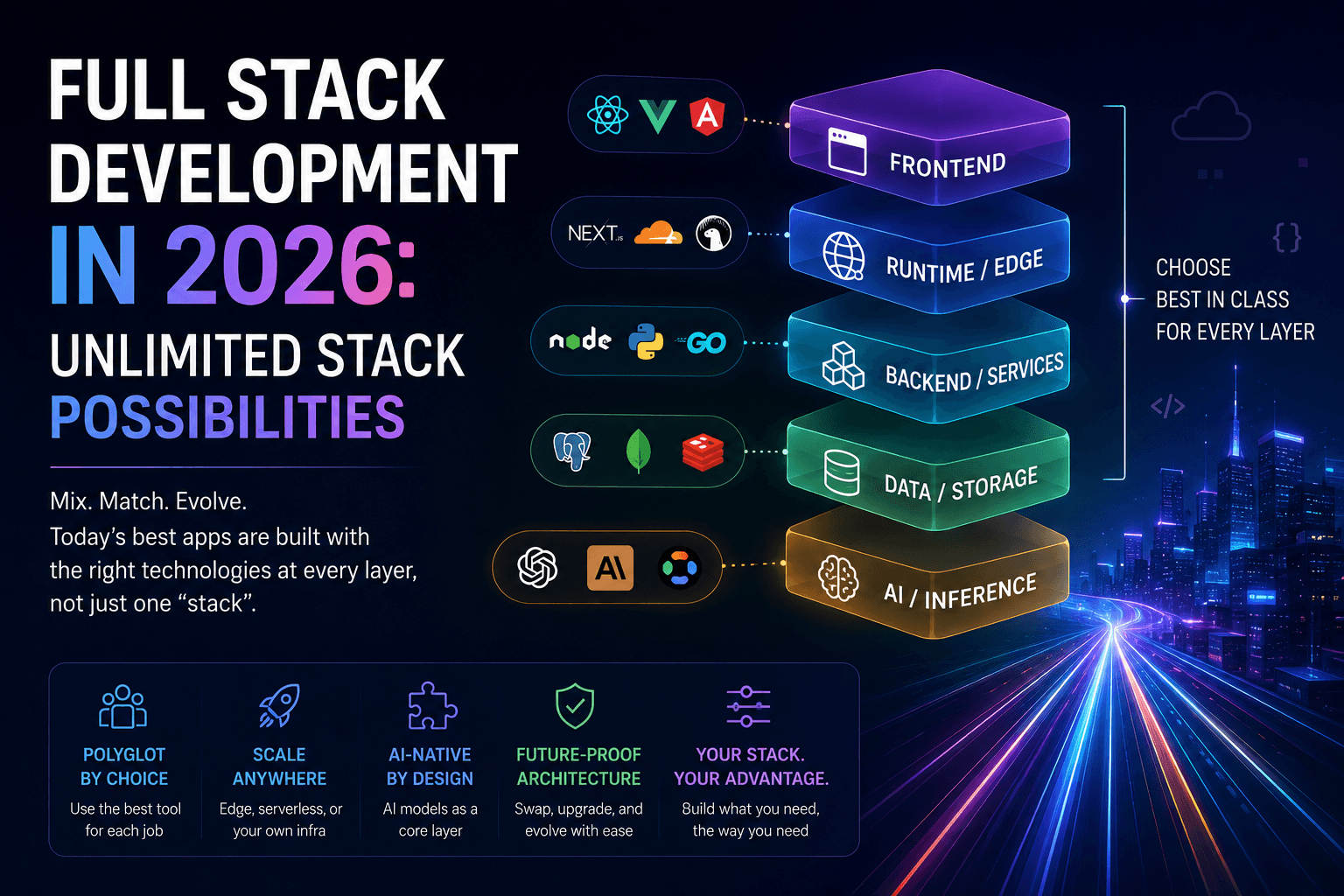
3. The Tech Landscape: What to Learn vs. What to Leverage
To build a career in 2026, you cannot learn everything. You must leverage standard tooling while focusing your deep knowledge on the architectural bottlenecks where automation fails.
| Engineering Domain | Leverage Automation (AI Does This) | Deep Knowledge Focus (Humans Must Master) | The Human Value-Add |
|---|---|---|---|
| Frontend | HTML/CSS Syntax, Renders | State Orchestration, UI Performance Tuning | Ensuring standard user flows and optimal memory use. |
| Backend | API Schema Generation, SQL Queries | System Design, Security Protocols, Data Modeling | Distributed consistency, distributed database logic, and OAuth setups. |
| Data & AI | Model Training/Fine-Tuning | RAG Architecture, Vector DB Management, Security | Bridging organizational data safely with neural outputs. |
| DevOps | CI/CD YAML, Dockerfiles | Edge Compute, Global Caching Strategies | Latency management at global endpoints (e.g., Cloudflare/Bun). |
But what about completely "no-code" platforms in 2026?
4. Mastering Problem Solving and Structured Thinking
The enduring value of learning programming is the absolute mastery of structured thinking and logical problem-solving. This cognitive skill set transcends any specific programming language syntax.
- Decomposition: The ability to take a massive business requirement ("Build an automated fraud detection pipeline") and break it down into thousands of verifiable logical steps.
- Conditional Logic: If automation writes the code but a programmer cannot visualize the myriad branching paths (if/else, switch case, try/catch), they cannot guarantee system predictability or security.
- Systems Thinking: Understanding that a small efficiency change in a frontend state manager might cause catastrophic compute overload in the relational database tier down the pipeline.
Conclusion: Shift Your Educational Investment, Not Your Intent
The demand for *knowledgeable engineers*—architectural orchestrators who can diagnose, integrate, and extend automated systems—remains at historical highs. Your educational goal must be to transition from a manual syntax writer to an architectural conductor of powerful technical instruments. If you want to invest in your cognitive infrastructure, the problem-solving logic gained from learning to code is irreplaceable.
To build a modernized, resilient career in this new paradigm, explore our specialized, system-design focused curricula at Bharat AI Career Labs or explore strategic corporate innovation and modernized tech integration through Bharat Consultancy Services.
Explore specialized, architecture-focused engineering programs designed for the landscape of 2026. Schedule a career strategy session with Bharat AI Career Labs today.
Define Your Engineering Path